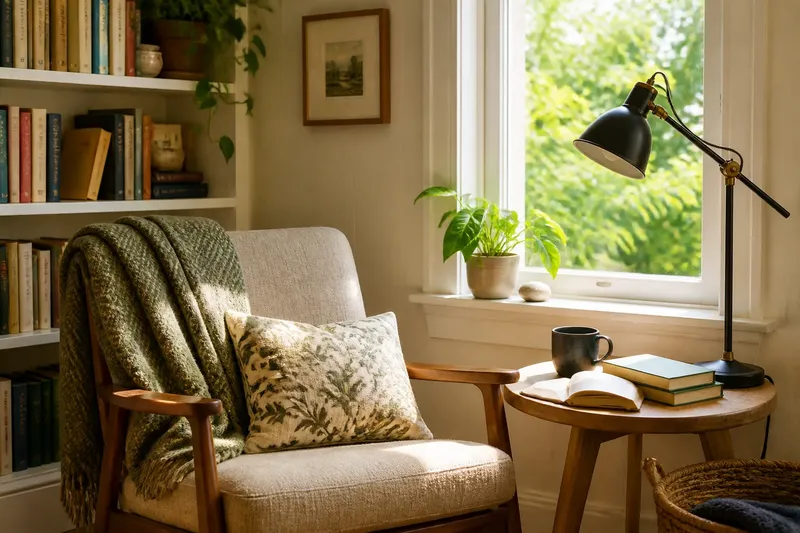
The Scented-Candle Shortcut to Calm
A scented candle does not automatically make a room restful. Learn to choose a scent by preference, notice its effect and create calm without fragrance.
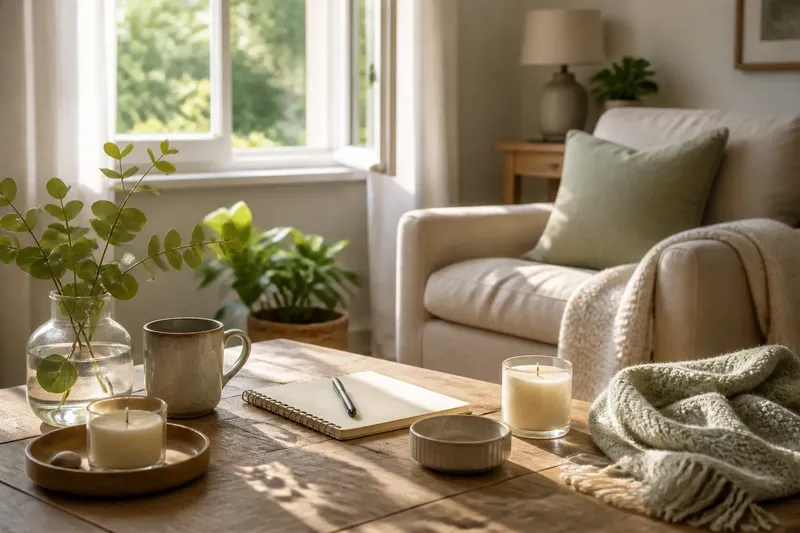
The common mistake with a scented candle is expecting fragrance to make a room calm by itself. A candle can instead become another sensation to manage: too sweet, too strong, or simply not to your taste. If you want a restful room, treat scent as a personal choice, not a shortcut.
Try this in order: settle the space, check how you feel about fragrance, then decide whether to light a candle at all. The aim is not to achieve a particular mood on command. It is to notice what helps you feel more at ease in your own home.
What is already shaping the room?
Before reaching for a candle, pause where you plan to sit. Notice the sounds, light, temperature and any smells already present. A kitchen may carry the smell of cooking; a sitting room may feel stuffy after the windows have been shut. Adding fragrance will not address every source of discomfort.
Choose one small adjustment first. You might open a window if the weather and your surroundings make that comfortable, move a mug from the table, or switch off a bright overhead light. This is not a cleansing ritual or a demand to make the room perfect. It simply lets you assess the space without adding another sensory layer straight away.
Scent is only one part of the room’s atmosphere, much like one cushion on a sofa. It can contribute to the whole, but it cannot make an uncomfortable seat comfortable on its own.
How do you know whether a scent suits you?
Start with your own response, not a candle’s label or another person’s idea of a soothing fragrance. Ask whether you enjoy the smell when it is faint, whether it brings an unpleasant association, and whether you tend to prefer the room without added scent. Preference can vary with the day and the setting.
If you are unsure, smell an unlit candle briefly in a shop or at home, then give yourself a moment away from it. There is no need to decide because a scent is described as relaxing, fresh or natural. Those words describe how a product is presented; they do not tell you how it will feel in your room.
Say you have a lavender candle you received as a gift, but its smell seems heavy after you have been reading for a while. You put it aside rather than lighting it, open the curtains and sit with the room as it is. The observable result you are looking for is simple: whether the space feels more comfortable without the added fragrance. If not, you can try a different change, rather than assuming you have failed to relax.
How can you try a scented candle without making it the whole point?
If you already enjoy a candle’s fragrance, make a modest trial part of an ordinary moment. Choose a time when you can pay attention to the room, rather than lighting it automatically whenever you want to unwind.
- Check the setting. Decide whether the room already feels comfortable enough to sit in, and whether a candle is welcome there.
- Choose a familiar scent. Use one you genuinely like, rather than selecting a fragrance because you expect it to create a particular feeling.
- Light it only if you want to. Follow the candle’s label and manufacturer instructions; the product and local rules determine its safe use.
- Notice your response. Pay attention to whether the scent feels pleasant, distracting or too prominent as you go about an ordinary activity.
- Make a choice, not a judgement. If you would rather have the candle out, stop using it. If the fragrance is comfortable, you can keep it as one optional part of the room.
This is an invitation to pay attention, not a test of how relaxed you can become. A fragrance you like may be enjoyable without changing your mood. That is a perfectly useful answer.
What can you use instead of fragrance?
A scent-free room can still feel welcoming. Try options that change the experience without introducing a smell:
- Use a lamp with a softer light, or adjust the angle of a lamp you already have.
- Move a chair so you can sit comfortably and see a view you enjoy.
- Put away one distracting object from the surface beside you.
- Choose a familiar piece of music or leave the room quiet, depending on what suits you.
- Bring in a textured blanket or cushion if touch is more comforting than fragrance.
- Let in fresh air when it is comfortable and practical to do so.
These are options, not a formula. A room might feel better with less sound, clearer space or a comfortable seat. You do not have to replace a candle with another sensory feature; leaving the room alone can be enough.
Which scent-free choices may suit your situation?
Can a room feel restful without any scent?
Yes. Comfort can come from light, sound, temperature, seating and the absence of distractions. If fragrance does not appeal to you, there is no missing ingredient to add.
What if someone else in the home likes scented candles?
Talk together about where fragrance feels welcome and where a scent-free space would help. A shared room works best when neither person has to treat their preference as the only reasonable one.
Should you choose a candle labelled calming?
Only if you like its actual scent. A label can suggest how a product is marketed, but your own comfort is a better guide to whether you want it in your home.
What if a fragrance feels unpleasant?
Stop using it and allow the room to return to a comfortable state. If you have a health concern or a strong reaction, seek advice from a qualified professional rather than trying to resolve it with another fragrance.
How can you make the choice part of home life?
Let your decision stay small. You might keep a candle for occasions when you actively want that particular scent, while leaving it unlit on ordinary evenings. Or you might decide that fragrance is not for you and choose a quieter, scent-free atmosphere instead.
The useful question is not whether a scented candle is calming in general. It is whether this scent, in this room, feels welcome to you now. When you search for a scented-candle shortcut to calm, keep that distinction in mind: your preference is the point, and no fragrance can replace making the room comfortable in ways that suit you.